
Our Longest Conversation
Or, how I let my father back in after a decade of silence

A quick detour before the essay Having My Mother's Hands: Father's Day called, and it turns out I have a father shift of my own to share. I originally penned a version of this story in 2020 for the League of Awesome Librarians.— here it is again, with fresher, mother eyes.
It’s a little after 9AM on a Friday morning and my dad just called me. No, there is no emergency. No, he doesn’t need anything. Instead, he tells me, “I just wanted to hear your voice.” And this is a tiny miracle.
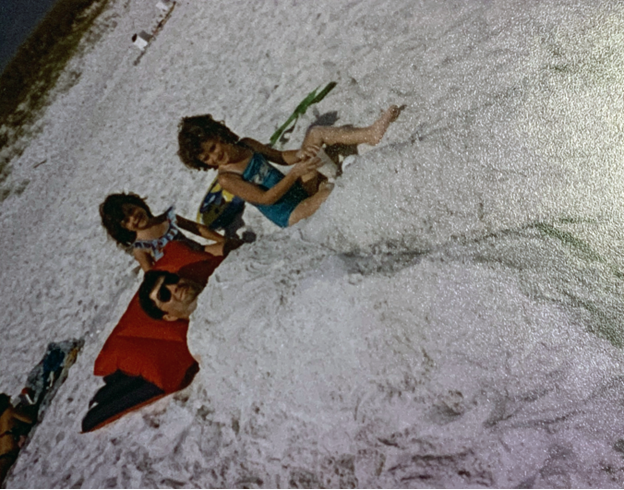
When they first divorced, I was five years old and I lived with my mother, visiting my father every other weekend. Mostly, I spent those three nights and two days every other week on my own. My older sister would be out with friends (and, rebel that she was, likely up to no good), my younger brother would be off to the batting cages or to play golf with dad, and I would be home alone. While this is certainly not stellar parenting (and we’ll try to cut my dad some slack—he was a mere twenty-five with three kids under the age of seven), my personality was five-going-on-forty and nothing bad happened.
At home, I’d spend my idle time doing chores, like stacking firewood or folding laundry. Or, on the best of days, my dad would drop me off at Chuck E. Cheese (yes—alone—I know there’s no defending that one, but it was the ‘80s, y’all). He’d give me a $20 bill to change into quarters and fetch me a few hours later. One of my favorite memories from that era is spending hours in the backyard with our new German Shepherd puppy, Max, tucked into a bright orange speckled puffy coat. I zipped him up as if in a baby harness and we rolled through the grass and down the slanted hill of the yard over and over again.
By the time Max was too big to fit into my coat, my dad had cycled through a series of girlfriends and, ultimately, the summer before I started fifth grade, he remarried. I was eleven and painfully existing in that awkward stage of prepubescence where you’re no longer a child but you’re not quite yet a teenager.
I felt these changes profoundly, navigating a series of self-discoveries and theologies to try and find my place in the world, especially as a young woman in the American South: While my dad was a lapsed Catholic, I dove whole-hog into the religion of my upbringing. I considered the ethics of eating meat and became vegetarian to much protest and even some outrage from my family. And when my stepmother told me I couldn’t invite my best friend to my birthday party because she was Black, I told her I wouldn’t have a birthday party at all.
As I became attuned to all the injustice of the world and the culture I was born into, I was an idealist—so very strident and self-righteous—and, in all probability, a total pain in the ass.
When I turned twelve years old, it was a legal milestone: in the state of Tennessee, I could officially choose whether or not I wanted to see both of my parents, who shared joint custody. It took me a few months to muster the courage, but one day, I decided not to visit my father anymore. It wasn’t so much about him; instead, it was about his conspicuous absence in my life and upbringing. He coached my brother’s ball team every year but I was lucky if he made it to a half dozen of my softball games. He barely even saw me on his weekends. Instead, in those later days, he left me in the “care” of my stepmother, a bigot with a heart full of hatred for all kinds of people, most of all, me—the flat-chested, pious twelve-year-old who refused to swallow her pride.
I don’t remember the particular action that set me off—her abuse took on many painful and creative forms—but I called the mother of my best friend in tears and begged her to please come and pick me up. As I walked out the door, my father told me the only way I could come back was if I apologized to my stepmother. I never did.
For the next ten years, I wouldn’t speak to my father again. The first year was the hardest—I was told I wasn’t allowed to go to any of my father’s family holiday celebrations if I wasn’t going “as a family” and my mother was working a double shift as a 911 dispacher Christmas eve and day. So, that first Christmas was spent with an aunt, a person in recovery who knew all too well the punishment of being a black sheep in our family. Her daughter wasn’t speaking to her and she otherwise would have been all alone, too.
My aunt was living in a small, pre-furnished condo that was a far cry from the house she had a few years earlier before she bottomed out. As I walked into her new place, she joked that decorating a tree was way too much work; instead, she had a Christmas tree made out of cardboard with little lights poked through holes in the back. On Christmas day, “Santa” came to her house and had brought me a giant makeup kit—not exactly what my Converse-wearing pre-teen would have asked for—but I was overcome by that mismatched present. She might not have known my favorite band or what I did after school but it didn’t matter. We had a stronger bond—a shared kind of pain and rejection that cuts too deep—so that even in the midst of that incredible loneliness, we found in each other immeasurable love.
Fast forward a decade later, my father has divorced and remarried and I’m in college taking a video art class—a kind of senior year dalliance (one that would, in fact, totally transform the trajectory of my life—but that’s a much longer story). We were given an assignment called “Landscape of a Person” —a kind of unconventional documentary portrait piece, inspired by Alan Berliner’s masterpiece Nobody’s Business, where we were asked to interview a subject in a way that moved beyond the surface.
Ever the over-achiever, I drove to Nashville, armed with my camera, and sat down to interview my father. The camera was cover—it gave me courage to risk the rejection I most feared: being, once again, just the daughter and not the beloved son. The piece I made from that interview was aptly titled, “Our Longest Conversation”; it marked the end of ten years of silence and the beginning of talking about some of the many things left unspoken.
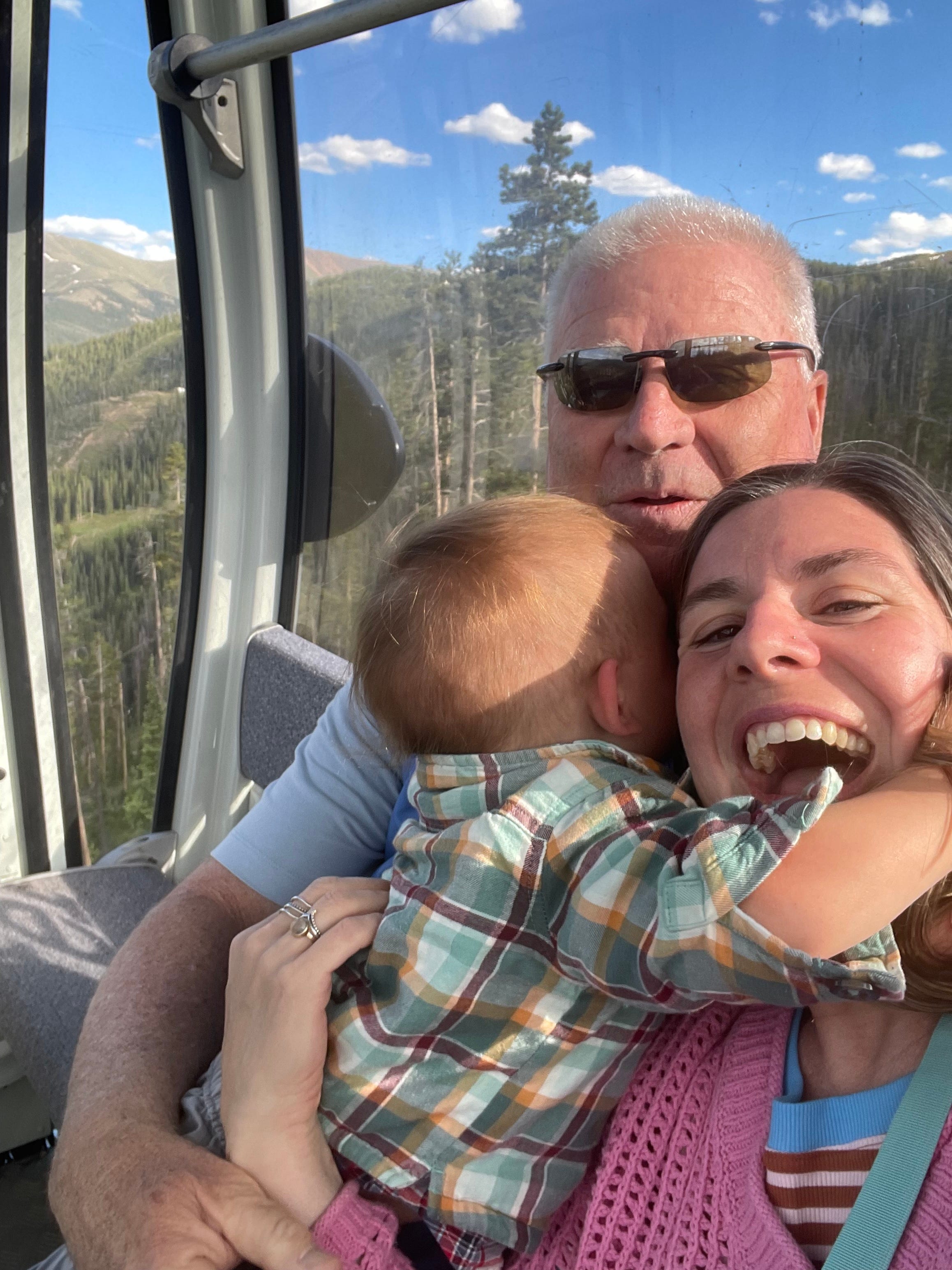
That conversation was the beginning of a parental comeback I had thought unimaginable. As a young twenty-something, I never thought I would have a relationship with my hitherto absentee father. Much less, I never imagined I would arrive at the place I am now: one where I choose to visit my father on the holidays—and actually look forward to it; a universe where my dad and I occasionally take vacations together; a world where my dad has just called me on a Friday morning at 9AM because he says he just wants to hear the sound of my voice.
I am no longer the religious zealot that twelve-year-old me was, yet I still believe in the concept of grace—a radical shift that is neither earned nor anticipated, a capacity for forgiveness for someone even though it may seem undeserved. Grace is how something so banal for so many people, a phone call from your dad on a weekday morning, can also be a tiny miracle.
Up Next: Having My Mother’s Hands: Rejecting the Dominant Culture Narrative About (Women’s) Aging
In the meanwhile, this librarian recommends:
📚 Spring
by Karl Ove Knausgaard (Public Library, Bookshop, Amazon)
An autofiction about a father stepping up when his wife’s mental health has taken a downturn. Told through the detailed minutiae of a single day, somehow avoiding tedium and triteness.
📚 A Death in the Family
by James Agee (Public Library, Bookshop, Amazon)
The posthumous autobiographical novel of James Agee is a poetic masterpiece of prose about a father’s sudden absence. It details a family’s grief after losing him in a car crash and will leave you breathless.
🎬 Nobody’s Business
directed by Alan Berliner (Stream via Kanopy)
The filmmaker dukes it out with his own reticent father in this poignant documentary about family history and memory.
🍼Production Notes: This post was written with the help of baby jail (aka a wooden play yard) and organic off-brand Cheerios.
How did I not know about Chuckie Cheese?!?